
I like building worlds for RPGs. Most game masters do. But if we build too much, we end up with an encyclopedia that’s no fun to play. No one asks about our 10,000 year history or creation myth. On the other hand, if we get too lazy, the world is no fun to build. We’ve optimized the fun out of the process. How do we avoid the worst of these extremes? With campaign worldbuilding.
As game masters, we spend a lot of time thinking about our world and preparing sessions. We need to enjoy the process. Campaign worldbuilding is focused on creating worlds that are both fun to build and fun to play. It all starts with shifting the mental model of what exactly it is that we’re doing.
I am building a world.
While true, this model leads us down the wrong path. We’re not just building a world.
I am building a world for a game.
That subtle shift means everything. After all, our goal is to play a game with these worlds. Treat worldbuilding as if you’re designing a video game. You created a 10,000 year history? Cool. What does that mean for someone who picks up this game? With everything we do, two questions will guide us:
- What excites me as a game master?
- How do I make it playable?
These questions will help us disarm an otherwise overwhelming array of options for where to begin.
What excites me as a game master?
Too many worldbuilders lean on verisimilitude to guide their inspiration. That way lies madness. Rather than starting with what makes sense, start with what excites you. Use your best ideas now. Then we make it make sense within the world. That’s the work and the method at the heart of keeping campaign worldbuilding fun. Let’s take a look at an example.
We need a settlement for the Aramanthir region of our setting. Traditional worldbuilding might beg questions about the rest of Aramanthir or world at large. What would the government look like given the region? What’s the geography and how might that influence commerce? But we’re not traditional. So I ask myself, what’s exciting me right now? Staring at me from my closet is this amazing cover art for HeroQuest. In particular, the wizard and dread sorcerer casting spells.
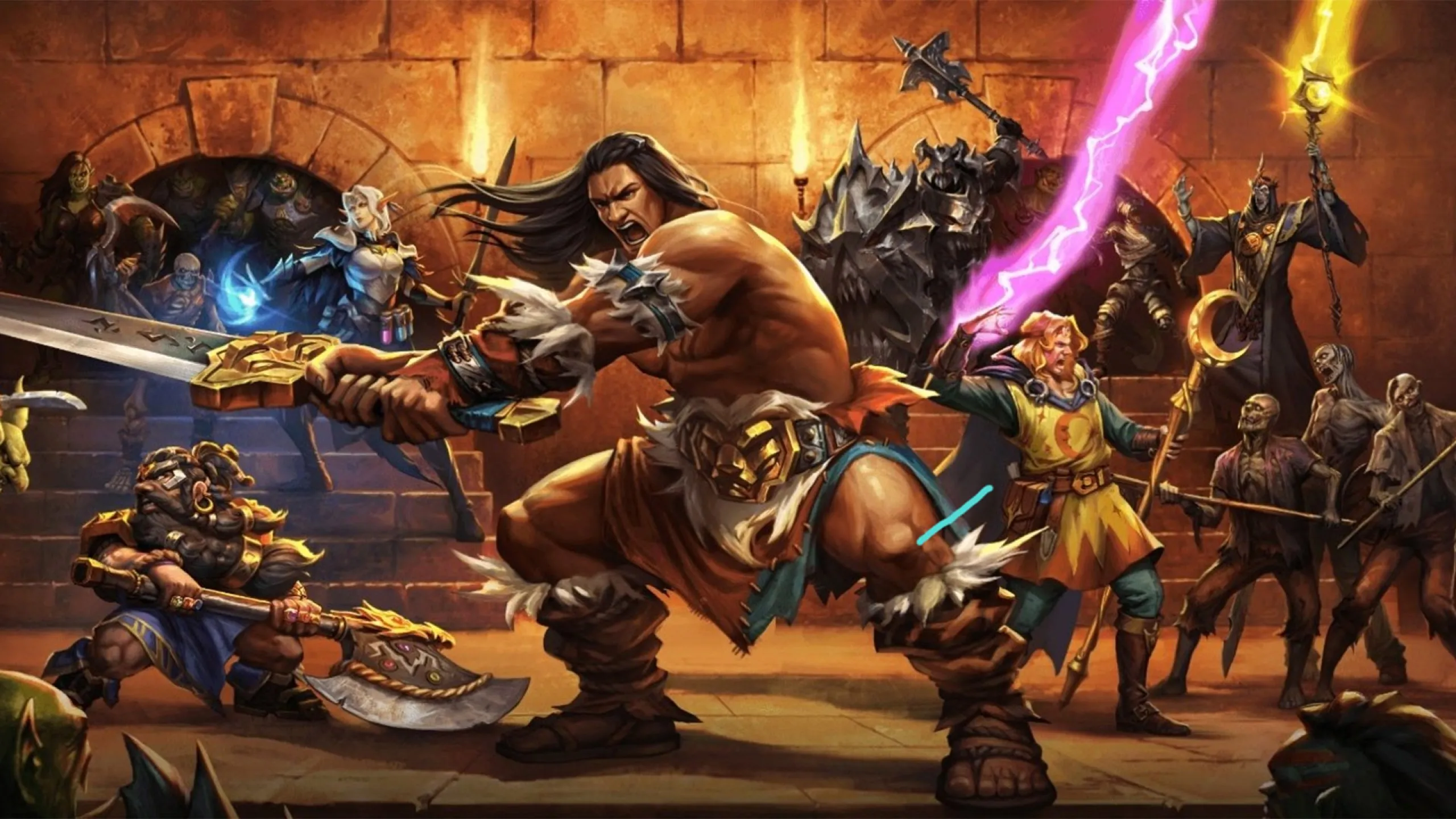 Art credits: Gary Chalk, Nikki Dawes, Max Dunbar, Les Edwards
So I start with a city held in a thousand-year conflict between a wizard and an evil sorcerer. The wizard’s tower floats above the city while the sorcerer has taken over the temple. Now I can work on how to make it make sense. The city isn’t destroyed because it’s turned into more of a cold war behind a delicate truce. Maybe Aramanthir is an autocracy, powerless to stop the conflict so they don’t try to exert much power in this city. And on and on. The important thing is that I started with something that excited me and built from there.
The same applies to borrowing from existing works. Using an established pantheon of gods is easier than building one. But what if you can’t find one that really excites you? Time to build. On the other hand, if the city of Spire excites you more than building your own city, use it!
How do I make it playable?
This question will guide us towards building worlds that are fun to run and play in. Wait, you enjoy building that 10,000 year history? Great! Build it but make it playable by asking this question. I promise it will be more fun than just coming up with the history alone.
Making it playable means thinking about discoverability, interactivity, and motive. For gods, the characters could discover them through character seeds, lore drops, or frequent shrines covering the wilderness. They might interact through prayers that offer mechanical boons, taking on quests from the clergy, or uncovering lost spells and magic items connected to the god. Their motive for interacting might be those mechanical boons or appealing adventure hooks. Let’s circle back to our city example.
The wizard’s tower and the sorcerer’s temple are prime adventuring locations to discover. They might even be locked in some arcane energy storm that looks like an aurora in the night sky. The truce bans all magic within city limits. A single spell could set off a war. And as for the wizard and sorcerer, each has factions vying for power within the city. The player characters will quickly learn which districts are run by which and what the differences are. The factions will provide quests. And on and on. An exciting, playable city awaits.
With campaign worldbuilding, we can avoid the pitfalls of overly lazy or traditional worldbuilding while keeping our process focused, fun, and valuable to the game. After all, we’re building a world for a game. Start with what excites you. Make it playable.
Game on.