
Non-player characters (NPCs) are the heart and soul of the game master’s toolbox. Through the best villains and king maker companions, we make the world come alive. But creating NPCs can be difficult. Sure, we can fuse archetypes. We can clean up our notes. But in the end, what should we even write down? What is the most impactful lever for creating and using engaging NPCs? Is it their motivation? What they want? Their background? I’d argue it’s none of the above.
More Than a Feeling
When our player characters walk into the local shop, how does the shopkeeper respond to them? We could assume that they have a happy background and jovial nature. That might be a start. But what if they were recently spurned by their best friend? That jovial nature might be tainted by anger or sadness. And what they’re feeling in the moment is our greatest tool as the game master.
We might not share the same backgrounds, motivations, and flaws as our NPCs. But we do share the language of feelings. And those feelings are the map for how to play them. Just think: is it easier to act as if “I’m motivated by fame” or “I’m angry”? Starting with feelings lets us jump into any character immediately. We can expand their personality from there.
Why Do They Feel This Way?
After starting with how they’re feeling, we can ask ourselves what is driving it. Maybe the angry shopkeeper just had an altercation with the previous customer. Or maybe they lost a bet. No matter the reason, it opens up more questions for us to fill out the character and the world. It might be just an NPC detail, but it might open entirely new adventure hooks.
Depending on the reason or personality, NPCs will show feelings differently. If our shopkeeper is angry, they might try to hide it. They might be good at that. They might not be. No matter what, it’s fuel for our game master fire.
Feelings Change
One of the easiest ways to show a living world is through change. And feelings change often! Our NPCs don’t remain static. The angry shopkeeper might become playful after banter with the PCs. Or they might feel depressed after learning of the dangers the PCs mention. No matter the change, these feelings are the perfect guide for game masters. They’re our signals for how to play each NPC.
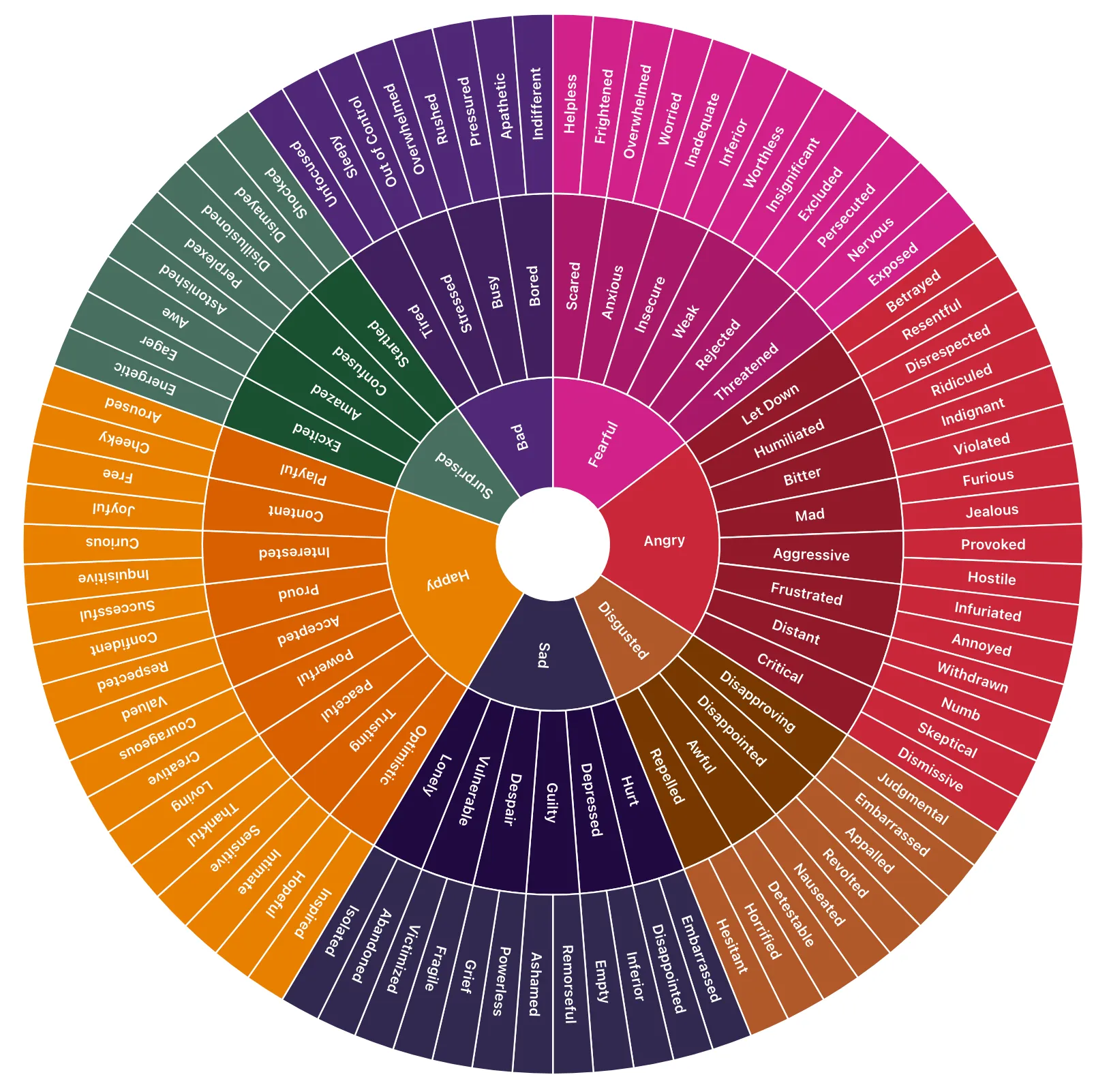
I’ve only mentioned a few feelings as examples. But resources like the feelings wheel bulk up our game master toolbox with tons of options. Our most impactful lever as game masters is starting with what our NPC is feeling and why. If we let that guide how we play them, we jump into character quickly, open up options for adventure hooks, and expand our living world through change.
Game on.